
Recycled PE packaging in Vietnam: ReFlex, GRS and the Vietnam Ecolabel
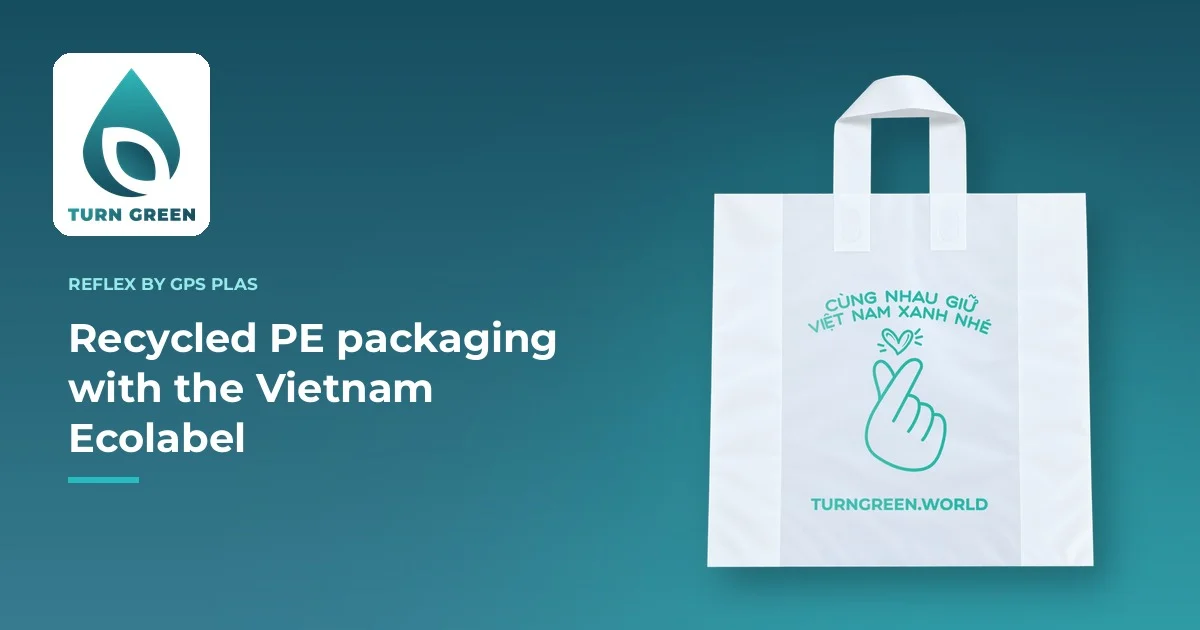
Short answer. ReFlex is recycled PE packaging by GPS PLAS. It holds the Vietnam Ecolabel under Decision 4054/QĐ-BNNMT of September 30, 2025, certificate code VN-ECO-2025-012, which requires at least 20% recycled resin, a film thickness of 50 µm or more and each side of 50 cm or more. ReFlex is recyclable again after use. In addition our factory has held GRS certification since October 2026.
Recycled plastic is the most practical route for many brands. It looks and performs like the PE bags customers already know, it goes through the same collection streams, and it helps with recycled-content targets that more export buyers now write into contracts. The difficulty is proof. This page sets out what ReFlex is certified for, and what the different labels actually mean.
Recycled, recyclable and PCR: the terms buyers mix up
Recyclable describes what can happen at the end of life. A mono-material PE bag is recyclable where PE film is collected. ReFlex is recyclable.
Recycled content describes what goes in at the start: the share of the material that came from recycled plastic instead of new resin.
Pre-consumer recycled plastic comes from industrial scrap, such as trimmings and off-spec rolls, that never reached a consumer. Post-consumer recycled (PCR) plastic comes from products that were used and thrown away. Many brand targets, including those in EU rules, count only post-consumer material, so always check which kind a supplier means.
A bag can be recyclable without containing any recycled plastic, and a bag with recycled content can be hard to recycle if it is laminated with other materials. Buyers should ask about both.
ReFlex and the Vietnam Ecolabel criteria for recycled bags
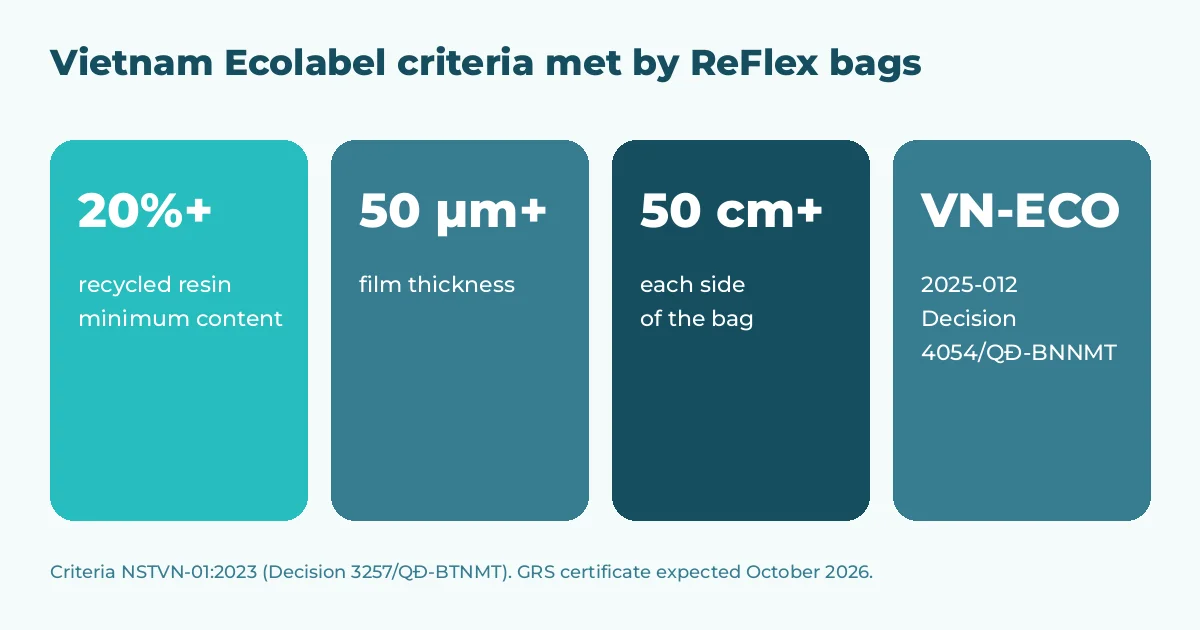
The Vietnam Ecolabel ("Nhãn sinh thái Việt Nam") for plastic packaging uses criteria NSTVN-01:2023, set by Decision 3257/QĐ-BTNMT of November 7, 2023. For recycled PE and PP bags, the criteria include:
- At least 20% recycled resin in the bag.
- Film thickness of 50 µm or more.
- Each side of the bag at least 50 cm.
The size and thickness rules are not random. They match the line in Decree 08/2022, which from January 1, 2026 stops the production and import of small, thin non-biodegradable bags. A thicker, larger recycled bag is meant to be reused many times.
The ReFlex certificate:
| Item | Detail |
|---|---|
| Decision | 4054/QĐ-BNNMT, September 30, 2025 |
| Certificate code | VN-ECO-2025-012 |
| Product in the decision | "Bao bì thân thiện môi trường Turn Green" (sold as ReFlex) |
| Criteria | NSTVN-01:2023 |
The product in the decision is listed under its Vietnamese description; ReFlex is the commercial name of that certified product.
GRS: what it certifies
The Global Recycled Standard, owned by Textile Exchange, verifies recycled content through the whole chain of custody, from the recycler to the finished product. It also covers social and environmental requirements at each certified site and restrictions on chemicals. Exporters supplying European and American brands are often asked for GRS, because it lets the brand make a recycled-content claim that an auditor can trace.
Where recycled PE fits under EPR
Under Decree 110/2026, producers and importers of covered goods must recycle a set share of the packaging they place on the market, or pay into the Vietnam Environmental Protection Fund. Flexible plastic packaging has a mandatory rate of 10%, and rigid HDPE, LDPE, PP and PS packaging 15%.
Using recycled content in your own packaging is a different act from meeting a recycling obligation, and the decree counts recycling results, so do not assume a recycled bag reduces what you owe. What recycled PE does do is support the recycling market that EPR is meant to build, and it gives sustainability teams a measurable figure for reports. The full picture is in our EPR guide.
How to check a recycled-content claim
Recycled content is easy to claim and hard to see. A recycled PE bag looks like any other bag, so the evidence has to come from paperwork. When we review a competitor's tender, these are the points we look for, and buyers can use the same checklist on us.
First, ask for the percentage and the basis. "Contains recycled plastic" means nothing; "at least 20% recycled resin by weight" is a claim someone can audit. Second, ask whether the recycled share is pre-consumer or post-consumer, because many brand targets count only post-consumer material. Third, ask who checked it. A Vietnam Ecolabel decision such as VN-ECO-2025-012 means the ministry assessed the product against published criteria. A GRS transaction certificate, once issued, traces a specific shipment back to the recycler.
Fourth, check that the evidence matches the product. Certificates are issued for a named product with a specification; a supplier cannot stretch one certificate over a different bag. Finally, keep copies. If a retailer's own customers or an auditor ask about the claim, the retailer needs the document, not the supplier's word.
Choosing between recycled, biodegradable and water-soluble
There is no single right material. Recycled PE fits where collection works and the bag can be reused. BioFlex or CompoFlex fit where a bag is likely to end up with organic waste. AquaFlex fits where the packaging should dissolve in water. We help customers compare them on the same specification.
FAQ
What is GRS certification? The Global Recycled Standard verifies recycled content through the full supply chain and adds social, environmental and chemical requirements. The GPS PLAS factory that makes ReFlex has held GRS certification since October 2026.
What recycled content does the Vietnam Ecolabel require for recycled plastic bags? Under criteria NSTVN-01:2023, recycled PE or PP bags need at least 20% recycled resin, a thickness of 50 µm or more, and each side of at least 50 cm. ReFlex holds certificate VN-ECO-2025-012 under these criteria.
Is recycled PE packaging recyclable again? Yes, when it is a mono-material PE bag and PE film is collected. ReFlex is recyclable.
What is the difference between pre-consumer and post-consumer recycled plastic? Pre-consumer material comes from factory scrap that never reached a user. Post-consumer recycled (PCR) material comes from used products collected after disposal, and many brand targets count only PCR.
Does recycled packaging help meet EPR obligations? Decree 110/2026 measures what producers recycle or pay, not the recycled content of their own packaging. Recycled packaging supports recycling markets and sustainability reporting, but check with your EPR adviser before counting it toward an obligation.
What thickness and size do eco-labeled recycled bags need in Vietnam? At least 50 µm thick, with each side at least 50 cm, under criteria NSTVN-01:2023.
Related guides
- AquaFlex PVOH water-soluble film
- Compostable packaging in Vietnam and EN 13432
- BioFlex PE-TPS biodegradable resin
- EPR under Decree 110/2026
- Vietnam Ecolabel rules for supermarkets
- Product page: /technology/reflex | Certificates: /resources/certifications
Talk to us about samples: info@turngreen.world